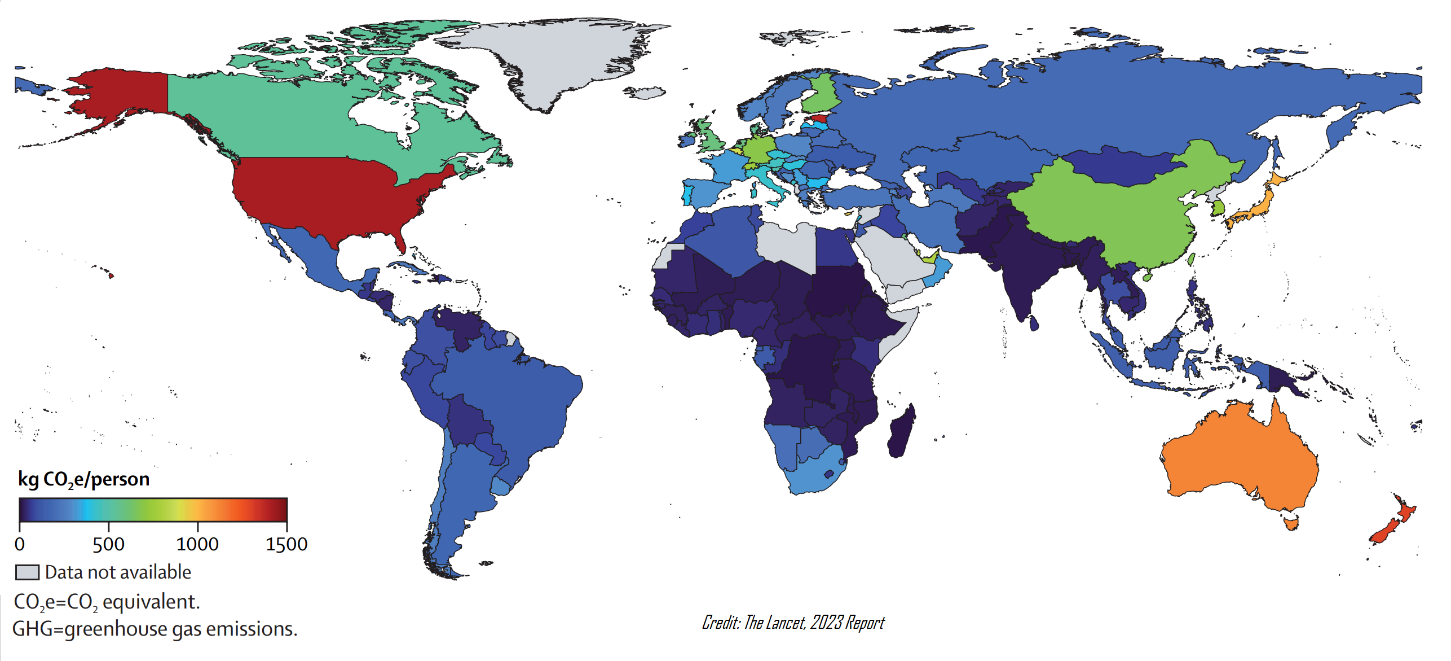

Quality healthcare requires use of energy, products, services, and infrastructure, all of which contribute to GHG emissions. Global healthcare emissions was 4·6% of total GHG emissions in 2020, with healthcare-associated PM2·5 and ozone responsible for about 4 million DALYs (Disability-Adjusted Life Years) annually. Globally, air pollution associated with healthcare delivery and supply chain led to an estimated loss of 4 million DALYs in 2020, with >50% of these health harms due to healthcare activities in China, while 12% attributable to the USA. Equally, fossil fuels still provide 80% of global energy, 26% of which comes from coal, and 68% of household energy still comes from polluting fuels.
Due to the global energy and economic crises, 100 million people risk returning to biomass for fuel, and many countries risk (or are already) turning to coal. Agricultural sector emissions add to the problem, increasing by 22% from 2000 to 2020.
Although the use of renewable energies is increasing, the pace is still insufficient to curb increasing emissions from growing fossil fuel use. In addition, global patterns of access to and deployment of renewable energy technologies, with low HDI countries left behind in the transition, contrast sharply with the availability of natural renewable energy resources.
More insights
Elevate Your Understanding: Discover More, Learn More.
Financial Markets as
accelerators towards
Net Zero targets
Ocean Heat and its Climate implications on Humans and Ecosystems around the World