
Climate Tipping Points
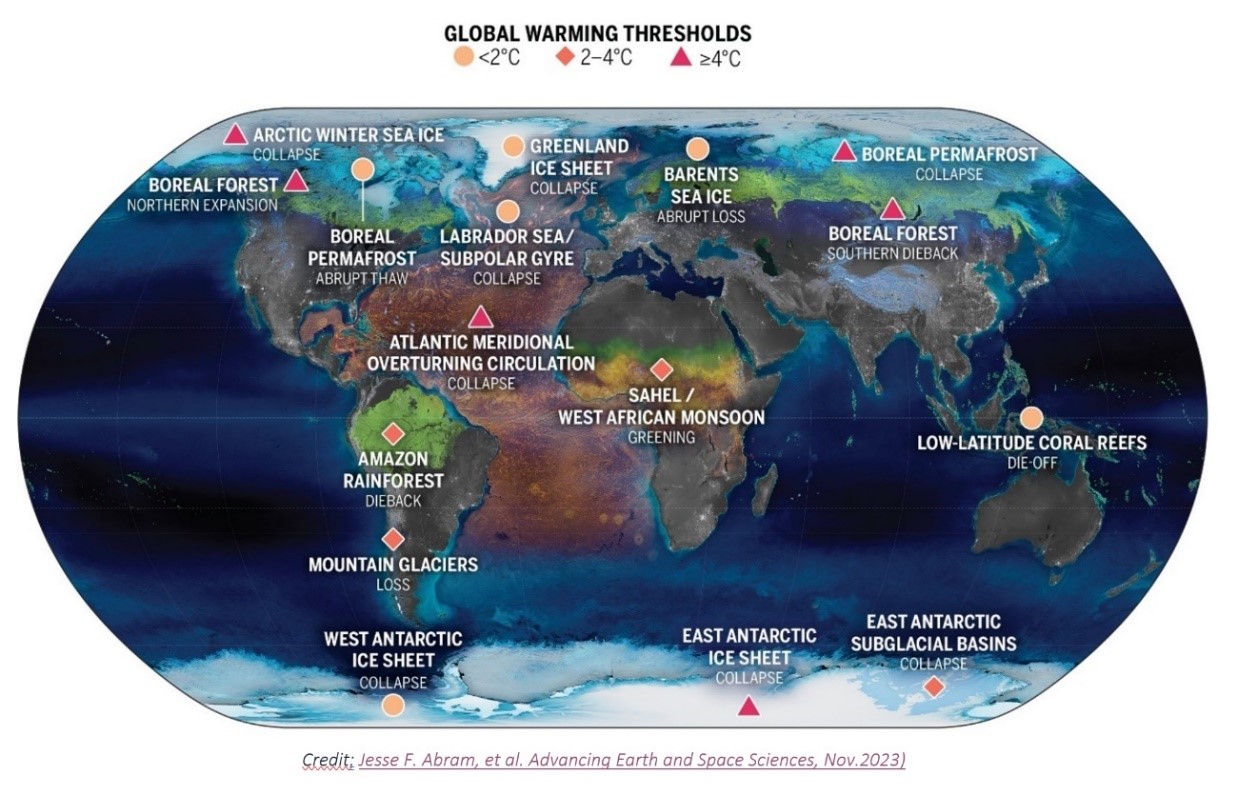
“Committed Global Warming” risks triggering multiple Climate Tipping Points.
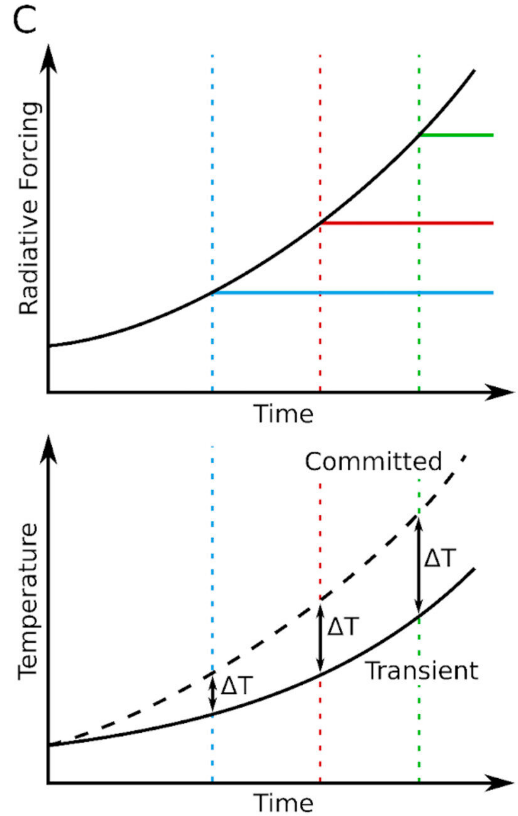
Committed global warming is one that continues after GHG emissions are held constant until a new thermal balance is achieved (much like turning a running faucet from hot to cold doesn't immediately change the water temperature, because there is still hot water in the pipeline). As the planet warms, climate tipping points (e.g., loss of the major rainforests) becomes increasingly likely. Jesse F. Abram et al presented 3 scenarios for how the global mean temperature could rise and trigger tipping point events. One represents an increased use of fossil fuels, another represents rapidly reaching net zero emissions, and a third closely matches the current trajectory.
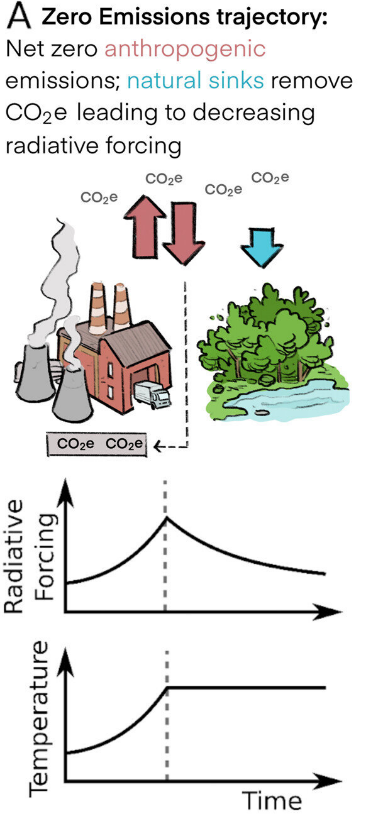
The main carbon sources and sinks, with radiative forcing described in terms of an effective CO2e concentration, accounting additionally for non-CO2e greenhouse gases.
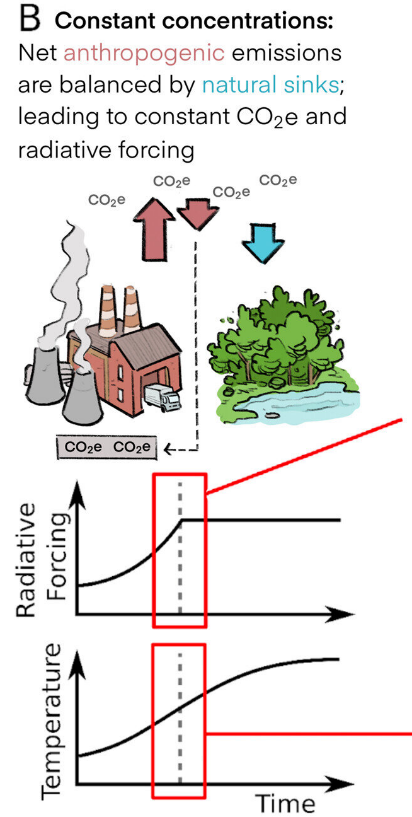
The conceptual differences between net zero and constant-concentration commitments. In net zero scenarios, human emissions are reduced, allowing for the change in radiative forcing to be negative and stabilizing global mean temperature (GMT). In constant concentration scenarios, atmospheric radiative forcing is held constant, and GMT continues to rise until equilibrium is reached.
The constant concentration scenarios are explored in this study, where we branch off at a given year from the Representative Concentration Pathway emission scenarios, leading to a potentially higher committed temperature than the transient temperature projected for that year.
Financial Markets as
accelerators towards
Net Zero targets
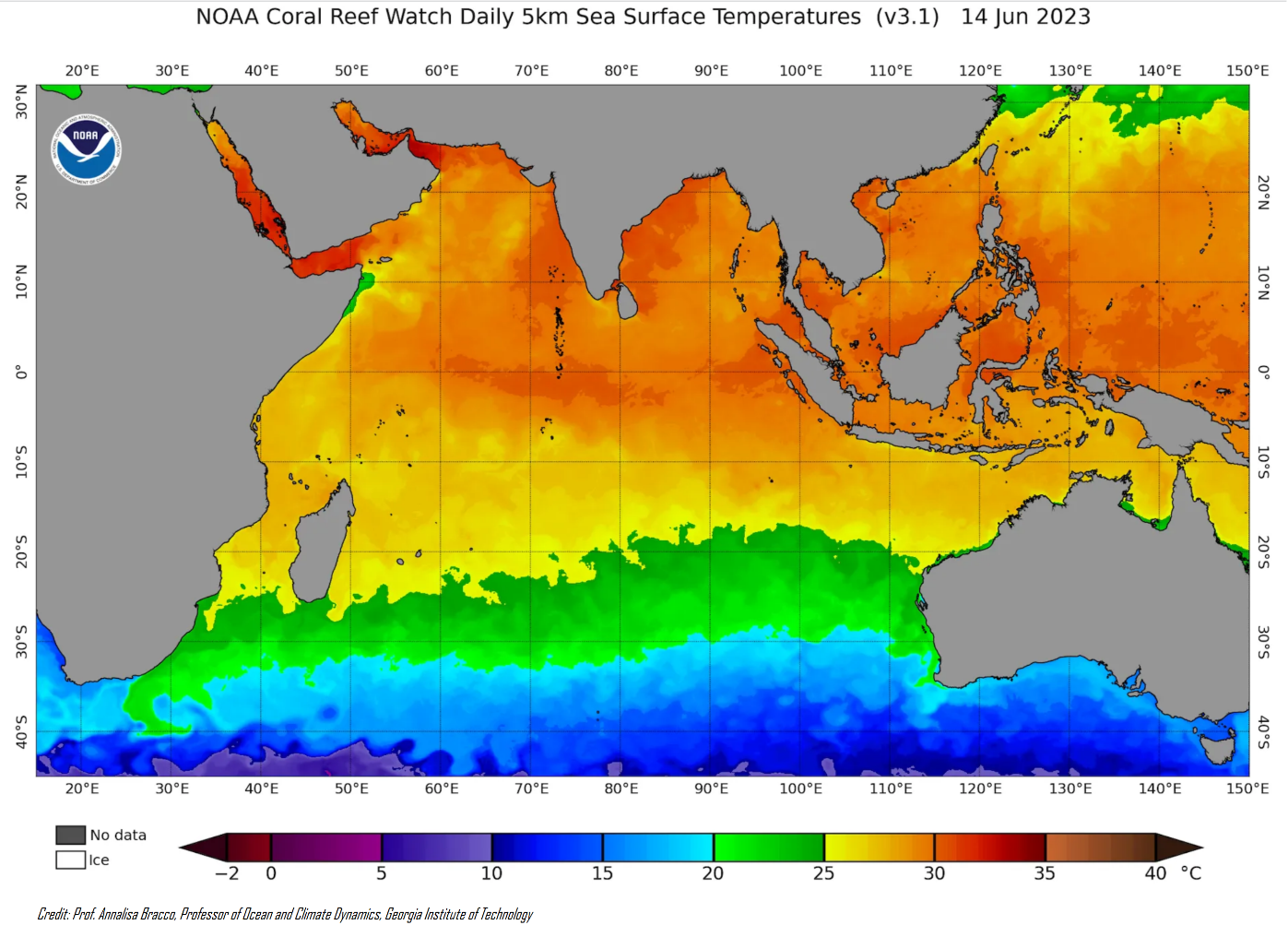
Ocean Heat and its Climate implications on Humans and Ecosystems around the World