Act now. Shape tomorrow. Together, for a sustainable future

Ocean Heat and its Climate implications on Humans and Ecosystems around the World

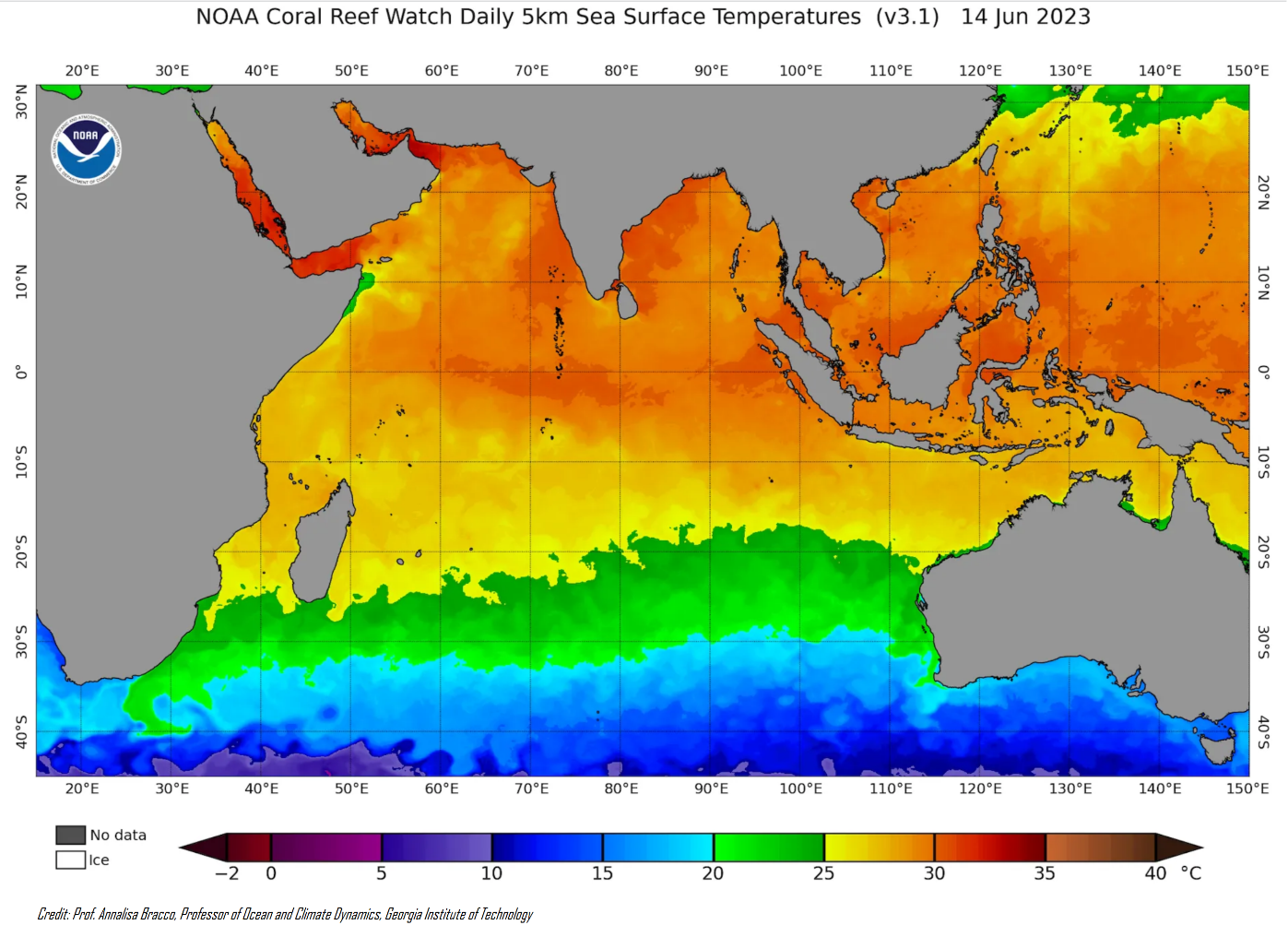
Ocean heat is off the charts, and here’s what that means for humans and ecosystems around the world — unusually hot ocean temperatures can disrupt climate patterns around the world — a slow start to the Indian monsoon, The sea of Japan is >7 o Fahrenheit (4oC) warmer than average, dwindling Arctic Sea ice, and drought in Europe,. Since mid-March 2023, Ocean temperatures have been off the charts, with the highest average levels in 40 years of satellite monitoring, and the impact is breaking through in disruptive ways around the world. The Indian Ocean’s heat is having effects on land. The Indian monsoon, closely tied to conditions in the warm Indian Ocean, has been well below its expected strength. El Niño is partly to blame. This climate phenomenon, now also developing in the equatorial Pacific Ocean, is characterized by warm waters in the central and eastern Pacific, which generally weakens trade winds in the tropics. This weakening of winds affects oceans and land around the world Underlying everything, another force at work on ocean temperatures is global warming — the continuing rising trend of sea surface and land temperatures for the past several decades as human activities have increased greenhouse gas concentrations in the atmosphere. Sea surface temperatures have been running well above the average since satellite monitoring began.

The world just came off three straight years of La Niña — El Niño’s opposite, characterized by cooler waters rising in the equatorial Pacific. La Niña has a cooling effect globally that helps keep global sea surface temperatures in check but can also mask global warming. With that cooling effect turned off, the heat is increasingly evident.

Western Europe and the whole Scandinavian Peninsula are also seeing rainfall far below normal, likely linked to an extraordinary marine heat wave in the eastern North Atlantic. Sea surface temperatures there have been 1.8o F to 5o F (1o C to 3o C) above average from the coast of Africa all the way to Iceland. Arctic sea ice was also unusually low in May and early June 2023, and it played a role. Losing ice cover increases water temperatures because dark open water absorbs solar radiation that white ice had reflected back into space.

These influences are playing out in various ways around the world.


More Insights

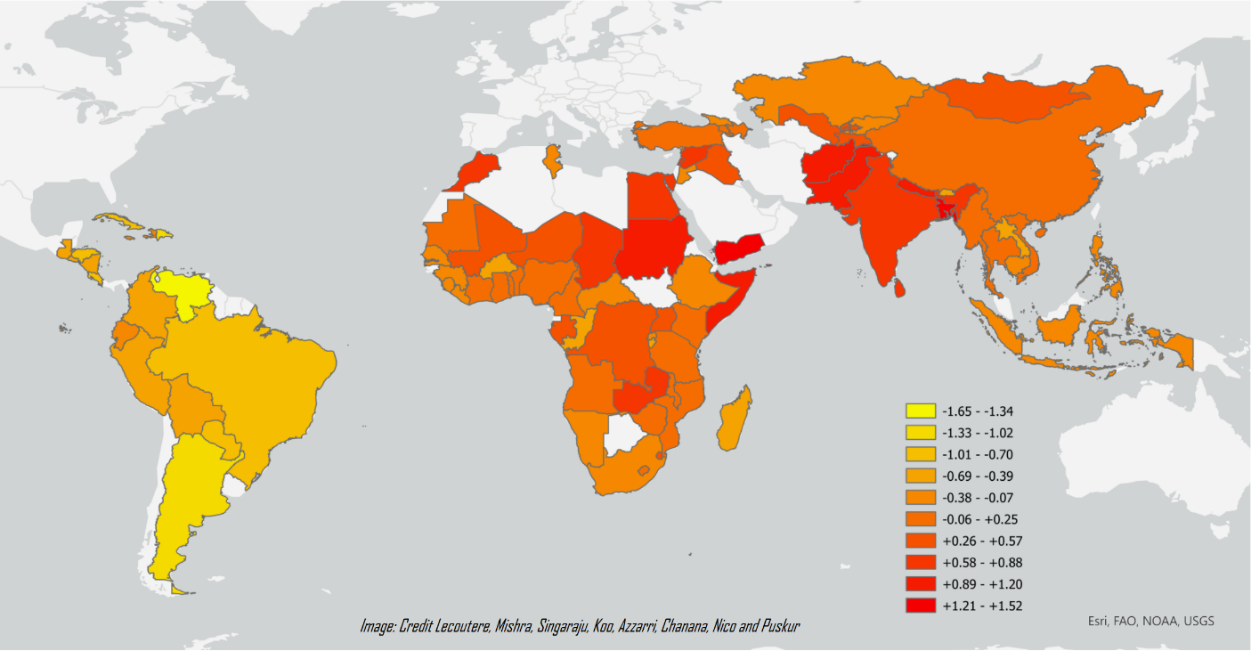
Inequality Hotspots Where Women In Agriculture Are Hit The Hardest By The Climate Crisis In 2023.

The climate-agriculture-gender inequality hotspot risk index captures the convergence...
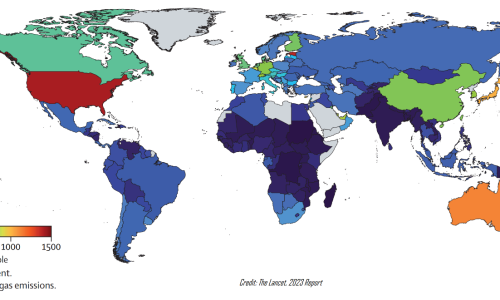
National GHG emissions per capita from the healthcare sector in 2020.

National GHG Emissions Per Capita From The Healthcare Sector In 2020.

Quality healthcare requires use of energy, products, services, and infrastructure, all of which contribute to...

graph A

“Committed Global Warming” Risks Triggering Multiple Climate Tipping Points.

Committed global warming is one that continues after GHG emissions are held constant until a new thermal balance is achieved (much like turning a...

Contact us now

Fill out the form below, and we will be in touch shortly.
Contact Information
Skip to content